Was Judicial Review Established in Marbury V Madison
Today marks the 219th anniversary of the landmark Supreme Court case, Marbury v. Madison.
The Midnight Judges
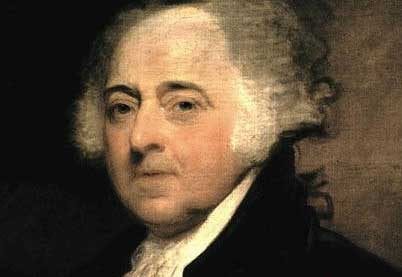
In the waning days of the Adams Administration in early on 1801, the Federalist Congress tried to strengthen the federal judiciary and soften its defeat in the election of 1800 past creating a number of federal judgeships, including justice of the peace positions in Washington DC. President Adams signed one of those justice of the peace commissions for William Marbury. However, the commission did not go far from Secretary of State John Marshall to Marbury before the new Jefferson Administration took over in March 1801. In the meantime, Marshall had been confirmed as Principal Justice of the Supreme Courtroom.
When the new Administration took office, Secretary of State James Madison refused to give Marbury his commission. Marbury thereupon sued Madison and asked the Supreme Court to issue Madison a writ of mandamus, a judicial lodge requiring Madison to manus over the commission. The Court had been given the power to issue such writs in Section xiii of the Judiciary Act of 1789.
Judicial Review

Somewhen, the Supreme Court took Marbury'due south case, and in 1803 it handed down what has been widely viewed as 1 of its most important decisions. Many people believe that Marshall's opinion established the practice of judicial review— the ability of the federal courts to strike down unconstitutional laws and executive actions. Others go further and debate that Marbury declared the Supreme Court to be the final, authoritative interpreter of the Constitution. Neither is true. As one scholar has noted, the Supreme Court had already been practicing judicial review earlier Marshall arrived: from 1789-1801, it decided viii cases involving a ramble challenge to federal laws and did the aforementioned in at least iii cases involving country laws. While President Thomas Jefferson did non like the part of Marshall's stance declaring that Marbury had a correct to receive his commission from Madison, Jefferson did not object to the opinion's statement that the Supreme Courtroom could declare an deed of Congress unconstitutional and therefore void.
Perhaps that is because Marshall did non declare the Court supreme over the other branches in its interpretation of the Constitution. In Marshall'due south view, declaring a law "void" only meant that it did not operate in a federal court; so in this example, the Supreme Court could not follow Section 13, which Marshall interpreted as unconstitutionally giving the Court original jurisdiction to outcome a writ of mandamus to executive officials like Madison. Marshall did not say that the Court'due south constitutional estimation bound the other branches; he simply denied that the other branches' estimation bound the Court. It had the power to translate the Supreme Police force of the land for itself in lodge to decide the legal case in front of it.
The Importance of Marbury five. Madison

So why and then wasMarbury so important? It established the Supreme Court as a politically and constitutionally contained co-operative of the federal government, which was by no means clear in the early days of the Democracy. In 1803, the Supreme Court was a weak establishment facing great political pressure level from the High Federalists on one side (who wanted the Court to assert its authorisation and embarrass Jefferson politically by forcing him to give Marbury his commission) and the victorious Republicans on the other side (who wanted Jefferson to refuse to comply and thus weaken the federal judiciary in favor of land courts). Marshall skillfully avoided both extremes: he pleased the Federalists by declaring that Madison owed Marbury his commission, just he avoided an unwinnable confrontation with Jefferson past saying that the Courtroom could not legally issue the social club to Madison. Instead of using the instance to institute the do of judicial review, Marshall articulated the doctrine of judicial review to decide the case in a way that protected and strengthened the independence of the federal judiciary, which he believed to be essential for a national democracy governed past the rule of law and respect for the rights of individuals.
Source: https://teachingamericanhistory.org/blog/chief-justice-marshalls-articulation-of-judicial-independence-marbury-v-madison/
0 Response to "Was Judicial Review Established in Marbury V Madison"
Post a Comment